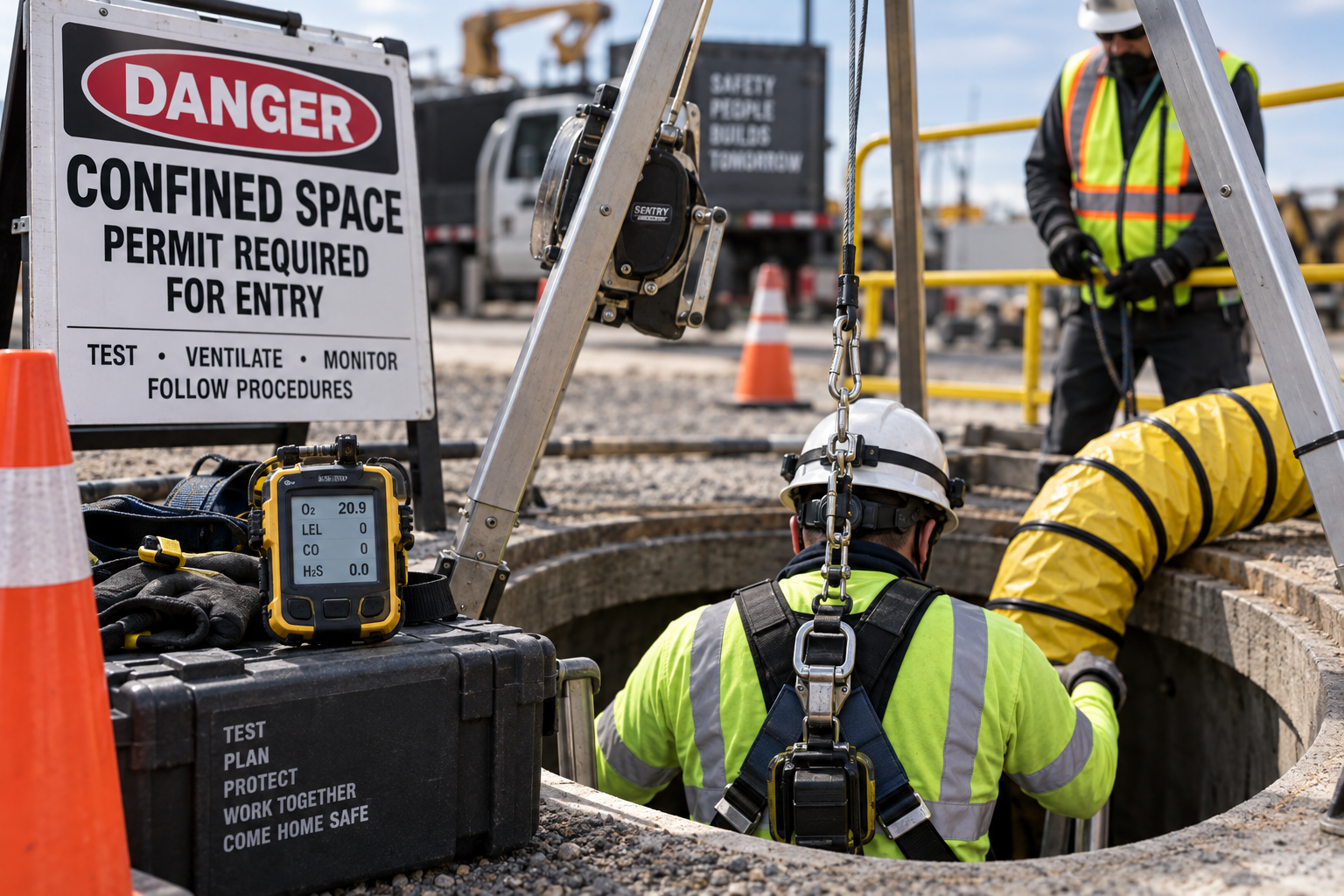
Construction Confined Spaces: How Contractors Can Prepare for Safe Entry
Confined space work can be easy to underestimate.
A worker may only need to enter a vault, tank, crawl space, pit, utility structure, or manhole for a few minutes. But conditions inside these spaces can change quickly. Low oxygen, toxic gases, electrical hazards, heat, engulfment hazards, and limited escape routes can turn a routine task into an emergency.
For contractors and construction employers, confined-space safety starts with identifying the space, understanding the hazards, and establishing the proper procedures before anyone enters.
The goal is simple: understand the space, control the hazards, and have a plan if something goes wrong.
At L&W Safety, LLC, we believe a safe confined-space entry starts long before someone climbs through the opening.
What Is a Confined Space?
Under OSHA’s construction standard, a confined space generally has three characteristics:
- It is large enough for a worker to enter and perform work.
- It has limited or restricted means of entry or exit.
- It is not designed for continuous employee occupancy.
Examples on construction projects may include:
- Manholes and sewer structures
- Utility vaults
- Storm drains
- Tanks and vessels
- Crawl spaces
- Pits and shafts
- Below-grade structures
- Certain ductwork and large piping systems
Not every confined space is a permit-required space. However, a space may become permit-required when serious hazards are present or could develop.
When Does a Space Require a Permit?
A permit required confined space may contain hazards such as:
- A hazardous atmosphere
- Oxygen-deficient or oxygen-enriched conditions
- Flammable gases or vapors
- Toxic gases
- Material that could engulf a worker
- An internal configuration that could trap or asphyxiate someone
- Electrical hazards
- Moving equipment
- Hot surfaces
- Chemicals
- Other recognized serious safety or health hazards
One of the biggest mistakes a crew can make is assuming a space is safe because it looks safe.
You cannot see low oxygen. You may not be able to smell a toxic gas. Conditions that were safe during a previous entry may not be safe today.
That is why confined-space decisions should be based on an actual evaluation, not assumptions or past experience.
Start With the Job Before You Start With the Entry
Before sending anyone into a confined space, ask a basic question:
Does someone actually need to go inside?
Sometimes work can be completed using cameras, extension tools, remote equipment, or another method that keeps employees outside the space.
If entry is necessary, evaluate both the space and the work being performed.
Consider:
- What work will happen inside?
- Could welding, cutting, chemicals, or fuel-powered equipment change the atmosphere?
- Are electrical, hydraulic, pneumatic, mechanical, or gravity hazards present?
- Could weather or water accumulation change conditions?
- Will multiple contractors or crews be involved?
- How would an injured or unconscious worker be removed?
These questions need answers before entry begins.
Have a Written Permit-Space Program
When employees enter permit-required confined spaces covered by OSHA’s construction standard, employers need procedures that address the hazards and entry operation.
The program should clearly establish:
- Who can authorize entry
- How hazards will be identified and controlled
- Who will serve as the entry supervisor
- Who will serve as the attendant
- Who is authorized to enter
- How atmospheric testing will be performed
- How workers will communicate
- What conditions require workers to exit
- What PPE and equipment are required
- How rescue and emergency response will be handled
The important part is making sure the program matches what is actually happening in the field.
A document sitting in an office does not protect anyone if the crew does not understand it or cannot apply it to the job in front of them.
Test the Atmosphere Before Entry
Atmospheric testing is one of the most important parts of confined space safety.
Before entry, appropriate monitoring equipment should be used to evaluate atmospheric hazards.
Testing may include:
- Oxygen concentration
- Flammable gases or vapors
- Carbon monoxide
- Hydrogen sulfide
- Other contaminants associated with the work or environment
Testing should not automatically stop once entry begins.
Conditions can change while employees are working, especially during welding, cutting, chemical use, pumping operations, or work around fuel-powered equipment.
Workers should understand what is being monitored, know what alarms mean, and know when they are expected to exit.
Never Treat the Attendant as an Extra Set of Hands
Permit required confined-space work involves specific responsibilities.
The attendant outside the space is there for a reason.
That person needs to maintain communication with entrants, monitor the entry operation, watch for changing conditions, prevent unauthorized entry, and initiate emergency procedures when necessary.
The attendant should not be given unrelated duties that interfere with those responsibilities.
The entry supervisor also plays an important role by confirming that required precautions are in place before entry is authorized.
Everyone needs to understand their role before the job starts.
During an emergency is the wrong time to figure out who was supposed to do what.
Plan the Rescue Before Someone Needs It
One of the most dangerous situations involving confined spaces happens when a worker collapses and a coworker immediately goes inside to help.
That instinct is understandable.
It can also create another victim.
Rescue planning needs to happen before entry.
The plan should address:
- Who will perform the rescue
- How the rescue team or emergency services will be contacted
- Whether the rescue service can respond appropriately
- How entrants will be removed
- Whether harnesses, retrieval systems, tripods, or winches are needed
- How responders will access the site
- How the rescue plan will be communicated to the crew
Simply writing “call 911” on a permit may not address every confined-space emergency.
Responders may need specialized equipment, site access information, or additional time to reach the worker. Those details need to be considered before entry begins.
Coordinate With Other Contractors
Construction rarely involves one company working alone.
General contractors, subcontractors, utilities, equipment operators, and specialty crews may all be working around the same area.
That creates another potential hazard.
One crew could unknowingly start equipment, introduce a chemical, block an access point, or create another condition that affects workers inside the space.
Before entry, everyone involved should understand:
- Who controls the space
- Who has entry responsibilities
- What hazards are present
- What work could introduce new hazards
- Who is providing monitoring equipment and attendants
- Who is responsible for rescue arrangements
- When conflicting work needs to stop
Good communication between contractors is part of confined-space safety.
Confined-Space Entry Checklist
Before authorizing entry, verify that:
- The space has been identified and evaluated.
- Entry is actually necessary.
- Hazards have been identified and controlled.
- The required permit has been completed.
- Atmospheric testing has been completed as required.
- Ventilation, isolation, lockout/tagout, and barricades are in place where needed.
- Entrants, attendants, and supervisors understand their responsibilities.
- Communication equipment is working.
- Required PPE and retrieval equipment are available.
- Rescue procedures have been verified.
- Other affected employers and workers have been notified.
Make Planning Part of the Job
Confined space safety is not paperwork for paperwork’s sake.
The purpose of the process is to protect workers from hazards that may be difficult to see, recognize, or escape from once they are inside.
A well planned entry protects employees, supports compliance, reduces unnecessary risk, and helps keep the project moving safely.
L&W Safety, LLC works with employers and contractors to develop practical safety programs, train employees and supervisors, identify workplace hazards, and strengthen jobsite safety practices.
If your crews work in or around confined spaces, review the plan before the next entry begins.
Because once someone goes inside, it is too late to start planning.
Safety requirements can vary by industry, jurisdiction, and state. Employers should review the OSHA standards and any state or local requirements that apply to their operations.