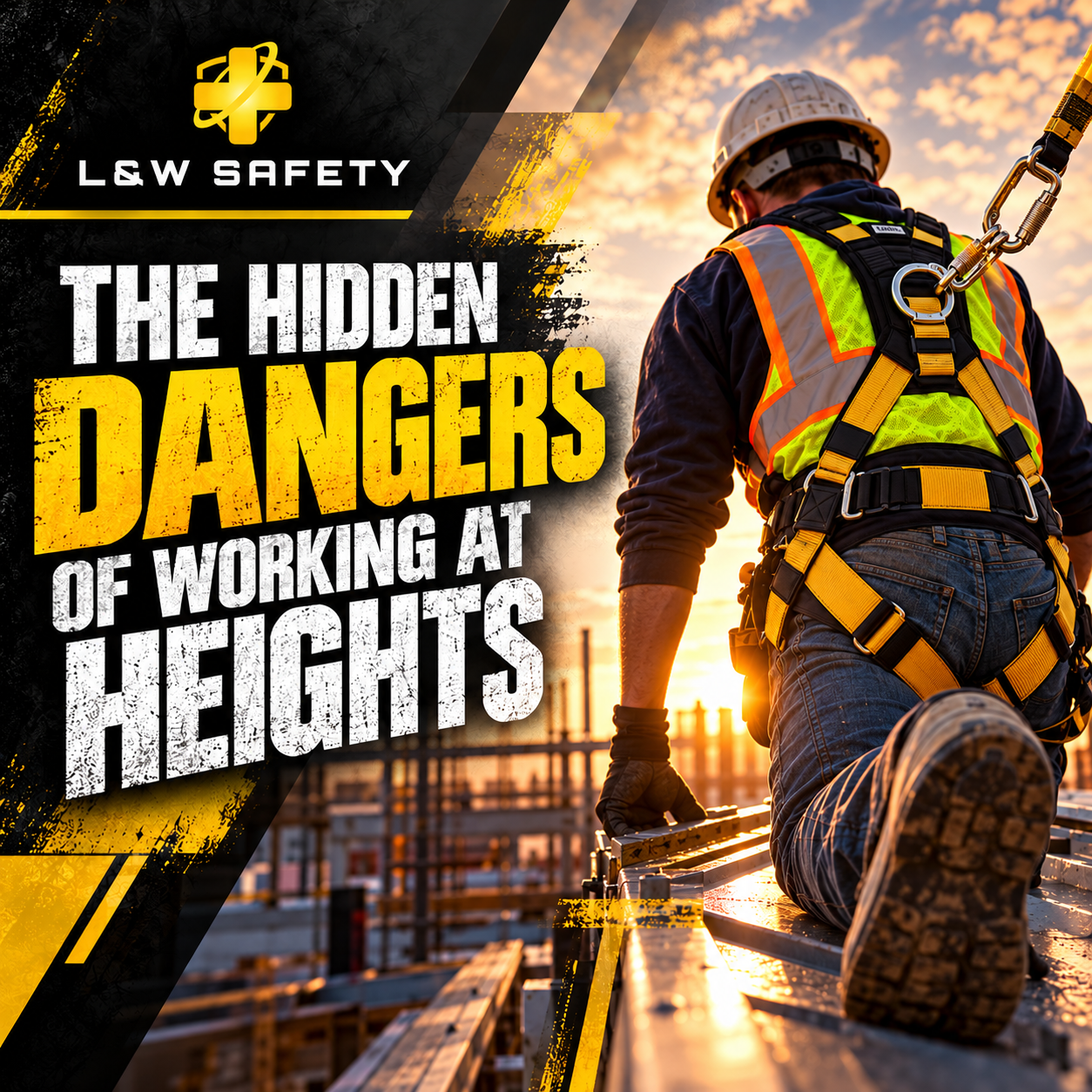
The Hidden Dangers of Working at Heights
Working at heights is one of the most common hazards in the construction industry. Whether employees are using ladders, working on scaffolding, performing roof maintenance, or operating elevated platforms, the risk of a serious fall is always present.
One of the biggest misconceptions about fall hazards is that dangerous falls only occur at significant heights. In reality, even a fall from a relatively low elevation can result in serious injuries or fatalities.
Preventing these incidents requires proper planning, appropriate equipment, employee training, and a consistent commitment to workplace safety.
Understanding the Risk of Falls
Falls remain one of the leading causes of workplace fatalities, particularly in construction.
According to the U.S. Bureau of Labor Statistics, falls, slips, and trips resulted in 844 workplace fatalities across the United States in 2024. Within the construction industry, 389 of the 1,034 recorded fatalities involved falls, slips, or trips.
These numbers demonstrate why fall prevention must remain a priority for employers and employees alike.
Falls can occur during routine activities, often when workers become comfortable with familiar tasks or underestimate the hazards associated with their surroundings.
Common Fall Hazards in the Workplace
Ladders
Ladders are frequently used for maintenance, inspections, and construction activities. However, improper ladder selection, damaged equipment, unstable surfaces, and overreaching can quickly create dangerous situations.
Employees should inspect ladders before use, maintain three points of contact while climbing, and select equipment appropriate for the task.
Scaffolding
Scaffolding provides access to elevated work areas but can introduce significant hazards when improperly assembled, maintained, or used.
Missing guardrails, incomplete platforms, inadequate access, and unstable structures can contribute to serious incidents.
Scaffolds must be erected, inspected, and used in accordance with applicable safety requirements, including oversight by qualified or competent personnel as required.
Roofing and Elevated Surfaces
Roof edges, skylights, and uncovered openings present serious fall hazards.
Skylights deserve particular attention because they may appear capable of supporting a worker’s weight when they are not designed to do so.
Employers should ensure that exposed edges and openings are properly protected before employees begin work.
Aerial Lifts and Elevated Platforms
Aerial lifts, mezzanines, loading docks, and elevated work platforms also present fall risks.
Employees should receive appropriate training, inspect equipment before use, and follow the fall protection requirements applicable to the specific equipment and task.
Understanding OSHA Fall Protection Requirements
OSHA establishes requirements intended to reduce fall-related injuries and fatalities.
Under 29 CFR 1926.501, fall protection is generally required in construction when employees are exposed to unprotected sides or edges six feet or more above a lower level.
However, certain construction activities and conditions have different requirements, including situations where protection is required at lower heights.
Employers must evaluate the applicable standards rather than assuming that work below six feet is automatically safe or exempt from fall protection requirements.
Additional OSHA standards address fall protection systems, equipment criteria, and employee training.
Building an Effective Fall Prevention Program
A successful fall prevention program begins before employees enter an elevated work area.
Three important elements are planning, providing protection, and training.
Plan the Work
Employers should identify fall hazards during project planning and determine what protective measures will be necessary.
This includes evaluating working surfaces, access points, equipment requirements, and potential rescue situations.
Provide Appropriate Protection
Whenever possible, employers should eliminate the need to work at heights or use protective systems that prevent workers from falling.
Depending on the task, these measures may include guardrails, properly secured covers, personal fall arrest systems, or other approved protective equipment.
Train Employees
Employees must understand the hazards associated with elevated work and know how to properly use the equipment provided.
Training should include recognizing fall hazards, inspecting protective equipment, understanding equipment limitations, and following safe work procedures.
Personal Fall Protection Equipment
Personal fall arrest systems can reduce the consequences of a fall when properly selected, installed, and used.
Before beginning work, employees should verify that:
- Harnesses, lanyards, and connectors are inspected for damage.
- Anchorage systems meet applicable requirements.
- Equipment is appropriate for the work being performed.
- Adequate fall clearance is available.
- Employees understand how to properly wear and use the equipment.
- An effective rescue plan is established.
Fall protection equipment should never be treated as a substitute for proper hazard assessment and safe work planning.
Creating a Culture of Fall Prevention
Fall prevention is not simply about meeting regulatory requirements. It is about creating a workplace where employees recognize hazards and feel responsible for protecting themselves and their coworkers.
Supervisors should encourage employees to report unsafe conditions, inspect work areas regularly, and address concerns before incidents occur.
Routine tasks deserve the same attention as complex projects because familiarity does not eliminate risk.
Safety Begins Before the First Step
Falls can happen in seconds, but preventing them begins long before an employee climbs a ladder or steps onto an elevated platform.
Employers who prioritize planning, training, inspections, and proper protective equipment can significantly reduce exposure to fall hazards.
At L & W Safety, we believe no task is so routine that safety can be overlooked. Every elevation presents a responsibility to recognize hazards, provide appropriate protection, and ensure employees have the training and equipment needed to work safely. Preventing falls begins with preparation and a commitment to protecting every worker, every day.