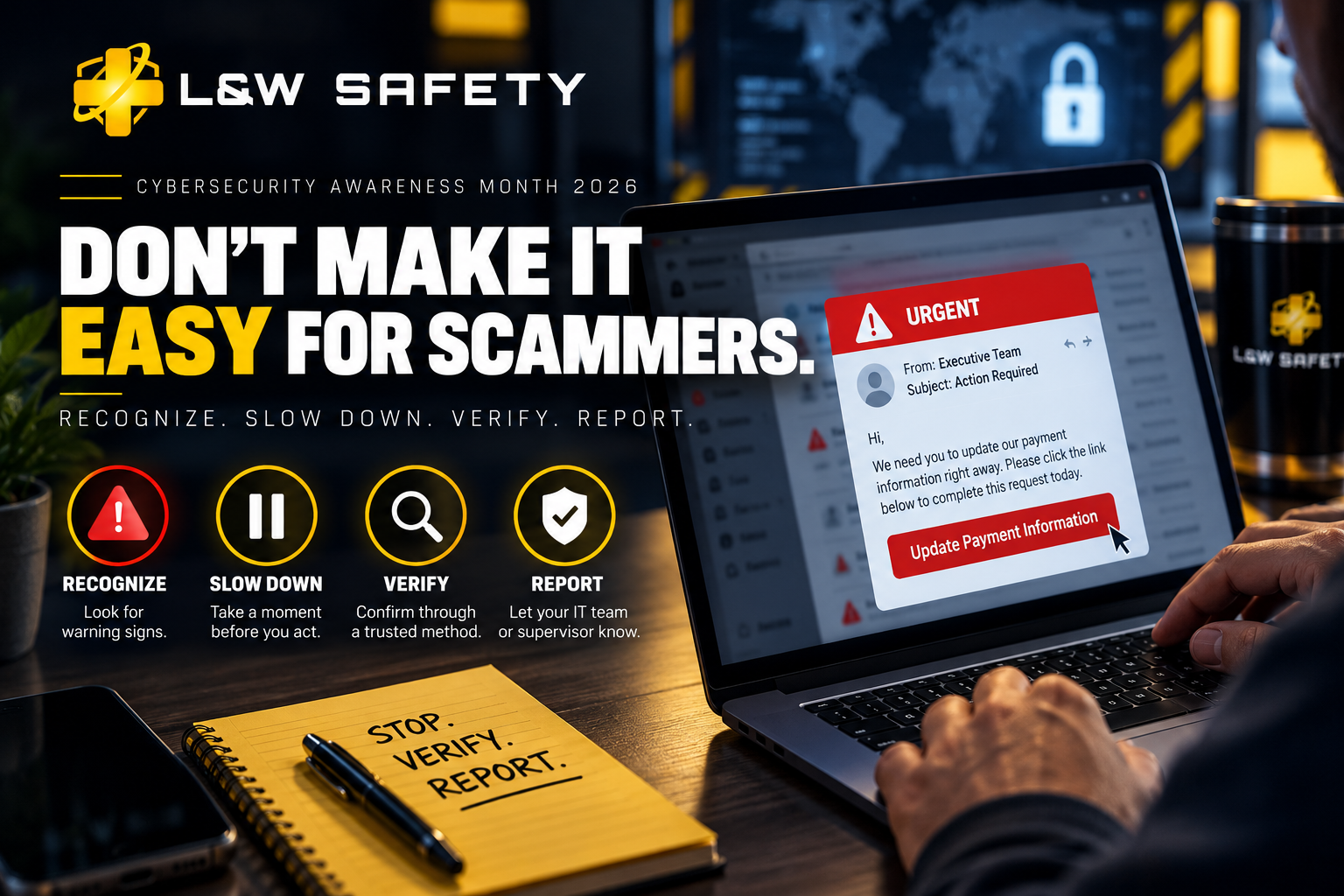
Cybersecurity Awareness Month 2026: Don’t Make It Easy for Scammers
October 2026 | LW Safety
October is Cybersecurity Awareness Month, and the 2026 theme from the National Cybersecurity Alliance is “Don’t Make It Easy for Them.”
When we think about workplace safety, cybersecurity may not immediately come to mind. But many cyber incidents begin the same way other workplace incidents do: someone encounters a hazard and has to decide how to respond.
Instead of a damaged piece of equipment or an unsafe work area, the warning sign might be an unexpected email, a suspicious link, an urgent request from a supervisor, or a phone call asking for information.
Recognizing those warning signs has become an important part of protecting both employees and the organizations they work for.
Why This Matters
Cybercriminals do not always need sophisticated tools to gain access to an organization.
Sometimes they simply need someone to click.
Phishing and social engineering attacks are designed to convince people to take an action before they have time to question it. An employee might receive what appears to be an invoice, password reset, document-sharing request, or message from someone in management.
The message may even look legitimate.
One of the most common tactics is urgency.
A message might say that an account is about to be disabled, a payment must be processed immediately, or a supervisor needs information “right away.”
That pressure is intentional.
The attacker wants the employee to react before they have time to verify the request.
What Employers and Supervisors Can Do
Employees need more than an annual reminder telling them not to click suspicious links.
They need a clear process.
Every employee should know how to report a suspicious email, text message, phone call, or request. They should know who to contact and what to do if they accidentally click something they should not have.
Managers should also create an environment where reporting suspicious activity is encouraged.
An employee should never avoid reporting a possible cybersecurity incident because they are worried about being embarrassed or getting in trouble.
Early reporting gives IT and management an opportunity to respond before a small mistake becomes a larger incident.
Cybersecurity awareness can also be incorporated into regular workplace conversations. A short reminder during a safety meeting, toolbox talk, or staff meeting can help reinforce good habits throughout the year instead of limiting cybersecurity discussions to October.
What Workers Should Know
One of the best defenses against phishing is simple:
Slow down.
Before clicking a link, downloading an attachment, providing information, or approving an unexpected request, ask yourself whether you were expecting the message.
If something seems unusual, verify it through a method you already trust.
For example, imagine receiving an email that appears to come from your supervisor asking you to immediately change payment information for a vendor.
The name looks correct. The message sounds convincing. Maybe it even contains the organization’s logo and email signature.
Do not reply to the message to verify it.
Instead, call the supervisor using a phone number you already have, contact them through your normal workplace communication system, or follow your organization’s established approval process.
That short pause could prevent a costly mistake.
Build Better Cybersecurity Habits
Employees should use unique passwords for their accounts rather than reusing the same password across multiple services.
A password manager can help create and securely store strong passwords, making it easier to avoid password reuse.
Multifactor authentication, or MFA, should also be enabled whenever possible, particularly for email, financial accounts, cloud services, and other important workplace systems.
MFA creates an additional barrier if a password is stolen.
Software updates are another important part of cybersecurity. Updates often contain fixes for known security vulnerabilities, so operating systems, browsers, applications, phones, and other connected devices should be kept current.
And when something looks suspicious, report it.
Do not click an unexpected link just to find out where it goes. Do not open an unfamiliar attachment just to see what is inside.
When in doubt, stop and verify.
Cybersecurity Is a Workplace Safety Habit
Many of the principles we already use in workplace safety apply directly to cybersecurity.
We teach employees to recognize hazards.
We encourage workers to stop when something does not look right.
We establish procedures for reporting incidents.
And we train employees before an emergency happens.
Cybersecurity should be approached with the same mindset.
Technology can provide important protections, but employees remain an important part of an organization’s defense.
Final Thoughts
Cybersecurity does not have to be complicated for every employee.
Most workers do not need to understand exactly how a cyberattack works. They need to understand how to recognize when something does not look right and what they should do next.
Strong passwords help.
Multifactor authentication helps.
Software updates help.
But one of the most valuable habits an employee can develop is knowing when to stop before clicking.
Pause. Verify. Report.
If an email, text, phone call, or online request feels unusual, urgent, or unexpected, take a moment before responding.
Making a scammer’s job harder can start with something as simple as refusing to make it easy.
Sources
National Cybersecurity Alliance
Cybersecurity and Infrastructure Security Agency (CISA)
At LW Safety, we believe workplace safety goes beyond physical hazards. Helping employees recognize suspicious activity, slow down, verify unexpected requests, and report concerns is another important part of protecting your people and your organization. Awareness is one of the strongest tools we have for prevention.