Mental Health Is Jobsite Safety: Looking Out for Your Crew This September
When we talk about jobsite safety, we usually think about the hazards we can see: fall protection, PPE, heavy equipment, electrical hazards, proper lifting, and following safe work practices.
But not every safety concern is visible.
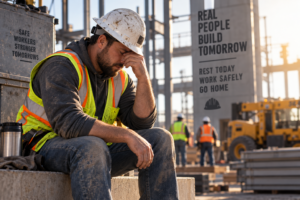
Stress, fatigue, personal struggles, financial pressure, long hours, and mental health challenges can follow a worker onto the jobsite. When someone is distracted, exhausted, overwhelmed, or simply not themselves, it can affect communication, concentration, judgment, and the decisions they make throughout the workday.
That is why mental health belongs in the safety conversation.
September is Suicide Prevention Month, making this an important time for employers, supervisors, safety professionals, and crews to talk about something that can sometimes be difficult to discuss: looking out for one another.
Safety Goes Beyond PPE
A strong safety culture is about more than making sure everyone has the right equipment.
It is about paying attention to the people wearing it.
Construction and other physically demanding industries can come with long workdays, changing schedules, deadlines, time away from family, physical strain, and pressure to get the job done. Add whatever someone may be dealing with outside of work, and that pressure can build quickly.
Sometimes the person struggling is not going to be the one who speaks up first.
That is where looking out for your crew matters.
You do not have to be a counselor or mental health professional to notice when someone does not seem like themselves. You simply need to be willing to pay attention and have a conversation.
Know When Something Doesn’t Seem Right
Everyone has bad days, and changes in someone’s behavior do not automatically mean they are experiencing a mental health crisis.
However, there are changes that coworkers and supervisors should not simply ignore.
A worker may suddenly become unusually quiet or withdrawn. Someone who is normally reliable may begin missing work or showing up late. You might notice increased irritability, exhaustion, difficulty concentrating, unusual risk-taking, conflicts with coworkers, or comments suggesting that the person feels hopeless or overwhelmed.
The goal is not to diagnose someone.
The goal is to notice.
A strong safety culture includes speaking up when something does not seem right, whether that concern involves an unsafe ladder, a damaged piece of equipment, or a member of the crew who appears to be struggling.
Sometimes the Best First Step Is Simply Asking
Checking on someone does not require a complicated conversation.
Find a private moment and start simple.
“You seem like you’ve had a lot on your plate lately. How are you doing?”
Then give the person an opportunity to answer.
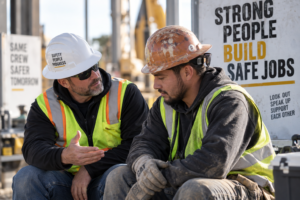
One of the biggest mistakes we can make is immediately trying to solve someone’s problem. Sometimes the first thing a person needs is someone willing to listen without judging them, dismissing what they are going through, or telling them to “just stay positive.”
Supervisors do not need to become counselors. They do need to know how to listen, respond appropriately, and connect a worker with available help when necessary.
That may include an Employee Assistance Program (EAP), health benefits, Human Resources, union assistance programs, community resources, or other support available through the employer.
If there is an immediate concern for someone’s safety, it should always be taken seriously.
Fatigue and Stress Are Safety Issues Too
Mental well-being is not limited to crisis situations.
Fatigue and everyday stress can also affect jobsite safety.
A worker who is physically or mentally exhausted may have slower reaction times, reduced concentration, poor communication, or difficulty recognizing hazards. On a construction site, around vehicles, electrical systems, tools, heights, or heavy equipment, even a brief lapse in attention can have serious consequences.
Employers should take an honest look at scheduling, overtime, breaks, workload, commute times, and other factors that may contribute to worker fatigue.
Telling employees to “work safely” only goes so far if the conditions surrounding the work make it increasingly difficult for them to do so.
What Employers Can Do This September
Suicide prevention and mental health awareness should not become another poster that goes up in September and disappears a month later.
Use this month as an opportunity to strengthen the safety culture you already have.
Take five or ten minutes during a toolbox talk to discuss stress, fatigue, and mental well-being. Make sure employees know where they can find available support resources. Train supervisors on how to have respectful conversations when they are concerned about an employee.
Most importantly, create an environment where workers know that asking for help, reporting fatigue, or saying they are struggling will not automatically result in ridicule or judgment.
Workers speak up when they believe someone is going to listen.
That same principle applies throughout safety.
Look Out for Your Crew
We spend a lot of time in this industry talking about watching each other’s backs.
Mental health should be part of that same commitment.
Notice when something changes.
Ask when something does not seem right.
Listen when someone decides to talk.
And when necessary, help connect that person with someone who can provide additional support.
Safety is ultimately about people.
At LW Safety, LLC, we believe a strong safety culture means doing everything we can to help workers return home safely at the end of the day. That includes protecting their physical safety while also recognizing when stress, fatigue, or mental health concerns may be affecting the people behind the hard hats.
Look out for your crew.
Sometimes a simple conversation can matter more than you realize.
Need Immediate Help?
If you or someone you know may be in immediate danger, call 911.
In the United States, you can also call or text 988 to reach the Suicide & Crisis Lifeline for confidential crisis support.
LW Safety, LLC
Building safer workplaces through training, awareness, and a stronger safety culture.