Classroom Safety Starts With Everyday Habits: A Back to School Checklist
As students return to school, classrooms quickly fill with new routines, supplies, lessons, and energy. It is also the right time to review the everyday practices that help make a classroom safer, calmer, and more prepared.
Classroom safety is not only about responding during an emergency. It starts with small, consistent habits: knowing where to go, keeping pathways clear, reporting hazards early, communicating clearly, and making sure every student knows there is an adult they can trust.
Start with a safe, organized space
A safe classroom should allow students and staff to move freely and exit quickly if necessary. At the start of the school year, teachers and staff can take a few minutes to check the room:
- Keep doors, aisles, and designated evacuation routes free of desks, backpacks, cords, boxes, and supplies.
- Store heavier materials securely and avoid placing items where they could fall or create a tripping hazard.
- Make sure first aid materials, emergency contacts, and classroom communication tools are easy for staff to locate.
- Check that doors, locks, windows, lighting, and classroom phones or radios work as intended, then report maintenance issues promptly.
- Secure potentially hazardous classroom materials, including chemicals, tools, sharp objects, and equipment.
Clear pathways and well maintained facilities support evacuation readiness while also reducing everyday slips, trips, and falls. Classroom safety guidance also emphasizes working door locks, clear exits, secure equipment, and reliable communication tools.
Review procedures before they are needed
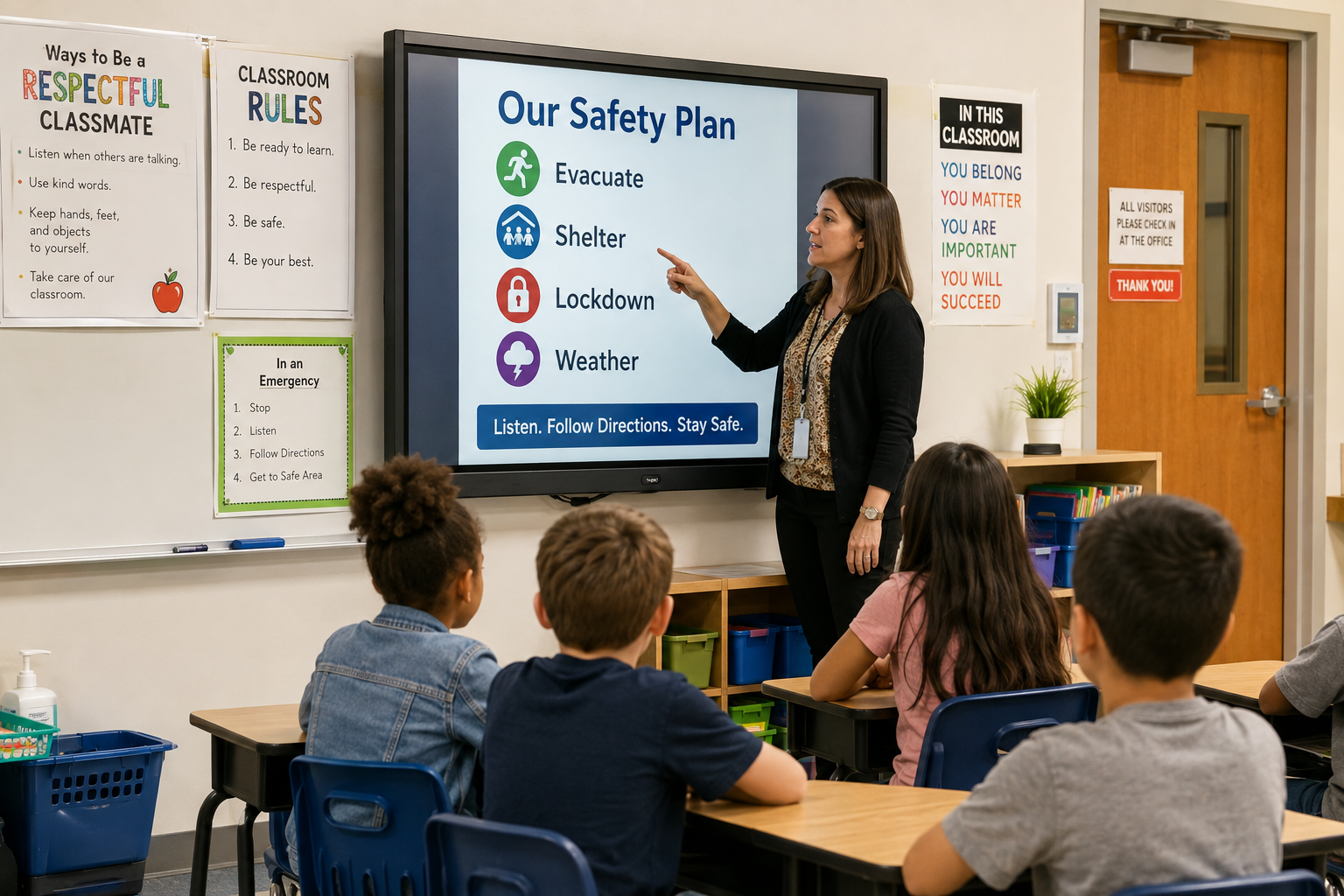
Students should understand what to do during an evacuation, lockdown, shelter in place, severe weather event, or other emergency. The goal is not to frighten students, it is to make procedures familiar enough that everyone can respond calmly.
At the beginning of the year, teachers should review:
- The primary and alternate evacuation routes.
- Where students should gather after leaving the building.
- The classroom’s designated safe area.
- How attendance will be checked during an emergency.
- How students should listen for instructions and avoid spreading rumors.
- Which adults they can go to if they feel unsafe, worried, or need help.
Regular, age-appropriate drills allow students and staff to practice the plan instead of trying to remember it under stress. School safety best practices also call for identifying a safe space in each classroom, empowering staff to activate an emergency response, and coordinating procedures with first responders.
Build a culture of reporting
Physical preparation matters, but a safe school also depends on communication. Students should know they can report a broken chair, a spill, a suspicious person, bullying, online harassment, a threat, or a concern about a classmate’s well-being.
Encourage students to speak with a teacher, counselor, administrator, school resource officer, or another trusted adult. Staff should take reports seriously, document concerns according to school policy, and respond without dismissing a student for “overreacting.”
When students feel heard, schools are better positioned to address concerns early. Guidance for back-to-school safety specifically encourages students to tell a trusted adult about scary or threatening behavior and encourages staff to create a welcoming environment for every student.
Make safety part of the daily routine
Safety works best when it is built into normal classroom routines rather than discussed only after an incident. A few simple practices can make a real difference:
- Greet students at the door and notice who may need extra help.
- Keep classroom doors closed and follow the school’s access-control procedures.
- Ensure visitors enter through approved check-in procedures and wear required identification.
- Keep emergency numbers and instructions visible to staff.
- Update substitute-teacher instructions with room-specific emergency information.
- Communicate safety concerns quickly through established school channels.
- Remind students not to share personal information, class schedules, or school locations publicly online.
Controlled visitor access, visitor screening, and clear staff response procedures are core elements of school safety planning. Students and families should also be mindful of sharing identifying information about a child’s school, grade, teacher, or routine on social media.
Safety is everyone’s responsibility
A classroom becomes safer when students, educators, administrators, families, and community partners share responsibility for it. The beginning of the school year is an opportunity to reset expectations and establish routines that protect physical safety, emotional well being, and the ability to learn.
At L & W Safety, LLC, we believe preparation begins with awareness. By keeping classrooms organized, reviewing emergency procedures, encouraging communication, and building trust, schools can create learning spaces where students feel secure, supported, and ready to succeed.
This school year, make safety part of the lesson plan from day one.