2026 Cal/OSHA Heat Illness Rules: What California Construction Employers Must Do Before the Next Heat Wave
Published by L&W Safety, LLC | California Safety Consulting & Training
Why Heat Safety Matters Right Now
Cal/OSHA issued heat advisories twice this year before summer even peaked. Inspections follow those advisories. Heat illness ranks among the most preventable causes of death on California jobsites, and the rules keep getting stricter.
The numbers tell the story. Construction recorded 18 heat-related deaths in 2023. More than one-third of all occupational heat fatalities nationwide came from your industry. Heat kills an average of 39 U.S. workers per year and injures 3,389 badly enough to force days away from work.
California’s standard works when employers follow it. Research published in Health Affairs linked Cal/OSHA enforcement to a 33 percent drop in outdoor worker heat deaths. After policy revisions, the drop hit 51 percent. The standard only protects your crew when you put it into practice.
Two Standards, Not One
Your company might fall under both heat regulations at the same time:
- Section 3395, Outdoor Heat Illness Prevention. Applies to all outdoor workplaces at all times. Shade kicks in at 80°F.
- Section 3396, Indoor Heat Illness Prevention. Took effect July 23, 2024. Applies when indoor temps reach 82°F.
If your crews work outside and inside structures, vehicles, or enclosures, plan for both.
Key differences to know:
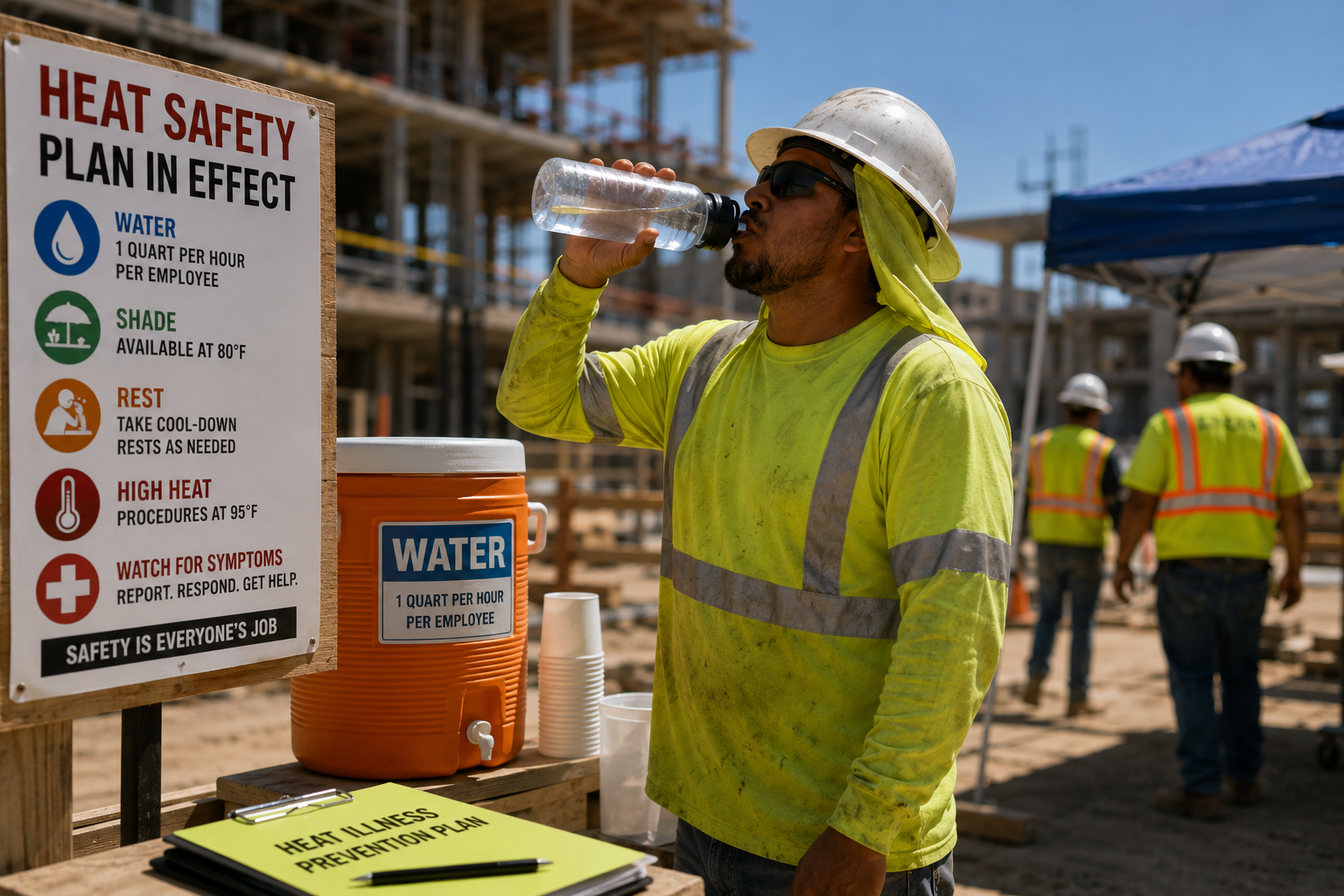
- Water: fresh, cool, one quart per hour per employee, free of charge. Indoor sites also need water at cool-down areas.
- Shade: open shade structures at 80°F outdoors. Indoors, maintain a cool-down area below 82°F and shield workers from radiant heat.
- Cool-down rests: on request, any time, under both standards. Watch workers for symptoms.
- Temperature monitoring: outdoors, track the temp and open shade at 80°F. Indoors, measure and record the temp or heat index at 82°F. Repeat when you expect a 10°F rise.
- Engineering controls: indoor sites must use them first where feasible. Keep temps below 87°F, or below 82°F for crews in restricted clothing.
- Acclimatization: closely observe new and returning workers for 14 days. Observe everyone during a heat wave.
- Written plan and training: required under both standards, for workers and supervisors.
The Four Pillars for Outdoor Construction Sites
Every foreman, superintendent, and safety manager needs to demonstrate these on demand.
1. Training
Train every worker and supervisor before heat exposure begins. Supervisor training must cover recognizing heat illness symptoms, responding to emergencies, and checking weather reports and heat advisories. Document the dates, the content, and the names. Inspectors ask for worker and supervisor records separately.
2. Water
Provide potable water. Fresh, suitably cool, free of charge. The standard is one quart per hour per employee, or four 8-ounce glasses. Making water available is not enough. You must actively encourage your crew to drink. Keep water as close to work areas as possible.
3. Shade
Deploy shade the moment outdoor temps hit 80°F. Below 80°F, provide shade on request. Shade areas must block direct sunlight, fit every worker on break without crowding, and sit as close to the work area as feasible.
Workers get a five-minute cool-down rest whenever they feel they need one. They should not wait until they feel sick.
4. Planning
Write a Heat Illness Prevention Plan (HIPP) specific to your worksite. A generic template pulled from the internet fails inspections. Inspectors check whether your plan reflects real conditions, job tasks, locations, and personnel. Cover water, shade, rest breaks, acclimatization, high-heat procedures, emergency response, and training.
High-Heat Procedures at 95°F
Construction is one of five industries with extra requirements at 95°F. The others are agriculture, landscaping, oil and gas extraction, and transportation of agricultural products, construction materials, or other heavy goods.
At 95°F, you must:
- Observe workers regularly for signs of heat illness
- Establish communication so employees reach a supervisor and supervisors reach emergency services
- Remind workers to drink water and take cool-down breaks
- Designate one employee on site to call emergency services, or use a buddy system where required
Skipping these steps at 95°F is a citable violation. Full stop.
Acclimatization: The Violation Inspectors Cite Most
The body needs time to adapt to heat. Cal/OSHA requires close observation of new and reassigned workers during a 14-day acclimatization period in high-heat areas. All employees need close observation during a heat wave.
A written policy alone will not save you. Inspectors want logs, work schedules, and supervisor records proving you followed the policy.
Proposed 2026 updates under AB 2243 would phase in heat exposure for new outdoor hires:
- Day 1: 20% of normal exposure duration
- Day 2: 40%
- Day 3: 60%
- Day 4: 80%
- Day 5: 100%
Workers returning after more than 14 days away would follow a shorter schedule: 50%, 60%, then 80%. If you cannot document a returning worker maintained similar conditions during the prior 14 days, the phased schedule applies. These changes were still in rulemaking as of mid-2025. Build your program around the stricter framework now and you will not scramble later.
What Inspectors Check on Site
Inspections get triggered by complaints, reported heat illnesses, programmed inspections in high-risk industries, and heat advisories. Cal/OSHA issued advisories as early as March this year. Here is what inspectors examine:
- Written HIPP: complete, site-specific, and current
- Training records: who, when, and what content, separated by workers and supervisors
- Acclimatization records: logs proving the policy was implemented, not just written
- Shade and cool-down areas: physically present, accessible, sized right, and at the correct temp indoors
- Temperature monitoring logs: required for indoor sites, and a missing log is a violation on its own
- Emergency response: workers and supervisors must describe the procedures out loud
- IIPP integration: heat hazards must appear in your Injury and Illness Prevention Program
A plan sitting in a binder nobody has walked through gives you almost no protection during an inspection. Neither does a shade structure nobody deploys until a supervisor gets asked about it.
The Cost of Getting This Wrong
California penalties rank among the highest in the country:
- Serious violations: up to $25,000 each. Federal OSHA caps at $16,550.
- Willful violations: up to $156,259 each
- Repeat violations: up to $156,259
- Willful violations causing death: up to $250,000 and prison time
These numbers are not theoretical. In December 2024, Cal/OSHA hit a Van Nuys landscaping company with a $276,425 citation after finding the company failed to provide water, shade, or training. First serious willful heat citation on record. The message to every outdoor industry in California was loud and clear.
Federal Rules Lapsed. California’s Did Not.
Federal OSHA’s heat National Emphasis Program expired on April 8, 2026 with no extension. The proposed permanent federal heat standard stalled. None of this changes your obligations in California. Sections 3395 and 3396 remain in full force with independent enforcement.
There is no wait-and-see period. The standards are active, inspections are happening, and summer is here.
Your Pre-Summer Heat Compliance Checklist
- [ ] Written HIPP is current, site-specific, and distributed to employees
- [ ] Training completed for all workers and supervisors before heat exposure begins
- [ ] Shade structures ready to deploy the moment temps reach 80°F
- [ ] Fresh, cool water stocked near work areas, one quart per hour per employee
- [ ] High-heat procedures documented and communicated for 95°F conditions
- [ ] Acclimatization protocol in place for new hires and returning workers, with supervisor logs
- [ ] Emergency response procedures known by supervisors, not just written in a binder
- [ ] Indoor workplaces reaching 82°F covered under Section 3396 with a separate HIPP
- [ ] Temperature monitoring logs maintained for indoor environments
- [ ] Heat illness prevention integrated into your IIPP
How L&W Safety Helps
Building a compliant heat illness prevention program takes more than downloading a template. L&W Safety works with California construction contractors, industrial employers, and small businesses to develop written programs matched to real worksite conditions, deliver documented training for supervisors and crew, and run safety audits to close gaps before an inspector finds them.
Need a complete Heat Illness Prevention Plan, supervisor training, or a full safety program review? Our team will get you compliant and keep your workers safe before the heat puts anyone at risk.
Contact L&W Safety today to schedule a consultation.
L&W Safety, LLC provides professional safety training and consulting services for construction crews, industrial teams, and businesses throughout California. This article is provided for informational purposes and does not constitute legal advice. Employers should consult with a qualified safety professional or legal counsel regarding their specific compliance obligations.